

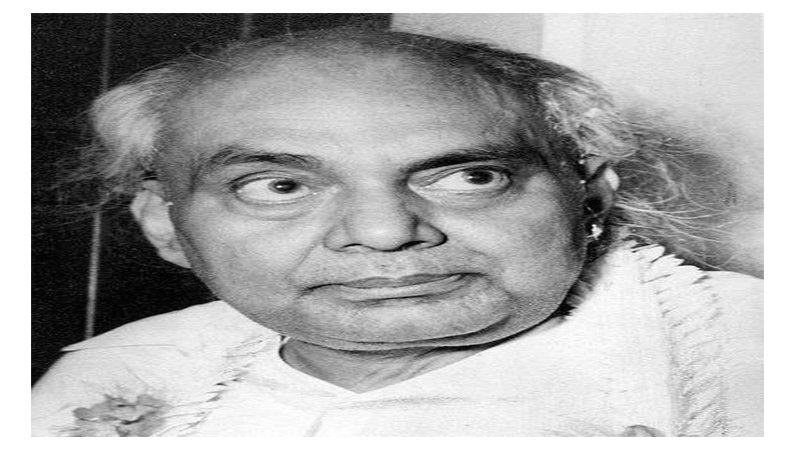
Nazrul was a champion of freedom. Though he believed in the community work, he rampantly propounded the idea of individualism and freedom in his literary works
Ariful Islam Laskar: Kazi Nazrul Islam (1899-1976), a poet of Bengal and of the world, is still neglected in world literature. Frankly speaking, this great poet is not well read and researched here in Bangladesh too. Moreover, by limiting him as a ‘Rebel Poet’, we have misread and misjudged him on many occasions while he himself shouted against this stereotype. He is a revolutionary poet and, on the top of everything he is a poet of love and, above all, his writings carry postcolonial zeal and voice against any sort of discrimination.
Nazrul did have a range of aesthetic arsenals in his disposal through which he has dispersed and unfurled his thought among mankind. So, to call him a poet only would be just like seeing the tip of the iceberg. He was a great musician, essayist, novelist, and playwright too. He even acted in movies and composed music for movies. However, still we have failed to unravel and appreciate Nazrul and his majestic versatility. In Dhumketu, a fortnightly, Nazrul fervently wrote about the independence of India from the British occupational force. This anti-colonial attitude and fervor are found in his famous poems ‘Bidrohi’, ‘ Bhangar Gan’, ‘ Anondomoyeer Agomone’ etc. He thoroughly went against the British Raj and was even arrested on few occasions for writing in fiery languages against their subjugation and limitless oppression. Even in jail, he continued to his resilience against Raj authorities fasting for 40 days.
His ghazals and Islamic songs also stirred the mind of the Muslim imagination. His famous song ‘O Mon Romzaner Oi Rozar Sheshe Elo Khushir Eid’ is a prelude to every Bangladeshi Muslim. They cannot think of Eid without this Islamic piece. On the contrary, he wrote Shaymasangeet, Vajan, and Kirtan, Hindu devotional songs that showed his depth of knowledge about Hindu myths and folklores. These two contrary sides of Nazrul show his secular attitude to life and religion. And, that’s why we find him composing these lines: “Of equality, I sing: where all barriers and differences between man and man have vanished, where Hindus, Muslims, Buddhists, and Christians have mingled together.” (Rebel and Other Poems)
Nazrul is a lover and a love poet. He fell in love; he got disappointed but he did not disrespect his love. His very emotional love letter to his first wife Nargis is a prodigious specimen of that. In his writing Nazrul echoes “trust me, I did not come this world to be a poet, to be a leader; I came to offer my love and to receive love. But disappointed and hurt, silently I bid goodbye to this loveless world” (translated by Nurul Huda). Nazrul says that love is the force that can destroy every evil force in this world. It can unify all the races of the world.
Nazrul was a champion of freedom. Though he believed in the community work, he rampantly propounded the idea of individualism and freedom in his literary works. That is why he does not hesitate to say ‘I salute none but me!’ which inevitably tells us that Nazrul was against any kind of ‘mental slavery’. To him, conscience is the best guide of you. Actually, he refused to ‘bow to anyone’ rather he declared the audience to keep their ‘head held high’ in any situation.
Nazrul firmly declares ‘I belong to every country and everyone. The caste, society, country or religion within which I was born was determined by blind luck. It’s only because I managed to rise above these trappings that I could become a poet.’ That is why to criticize Nazrul is not that easy. He is boundless and goes beyond everything. And he firmly knew that to be a true poet he could not confine yourself in one single entity. A poet is not a limited edition of anything. If we closely study the life and works of Nazrul, this becomes evident to his careful readers.
Nazrul’s vast body of works always sings the song of vitality, freedom, and humanity. His scathing writing against any sort of racism and communalism demonstrates that he always longed for justice and parity. He could not tolerate the word ‘injustice’ and ‘hatred’. If he had the power, most probably, he would have obliterated the word from the dictionary. He was unprejudiced against any blind following of religions.
It’s difficult to write in short about a literary figure of such caliber. Nonetheless, mere admiration and love for Nazrul will not bring anything good. His words should be read and understood and apply it in our life. He is a world poet and his universal spirit needs to be known by people of all countries. Hence, we should translate Nazrul as much as possible. Lastly, today, in this dire situation where whole humanity is in crisis; where all sort of perversion and anarchy is subsuming everything, we really need to re-invent and explore Nazrul. In this pseudo-democratic world, when our freedom of speech is at stake must extend our hand to Kazi Nazrul Islam, a giant figure of Bengali literature.